How ZAPPLY Built Influencer into Their Main Acquisition Channel
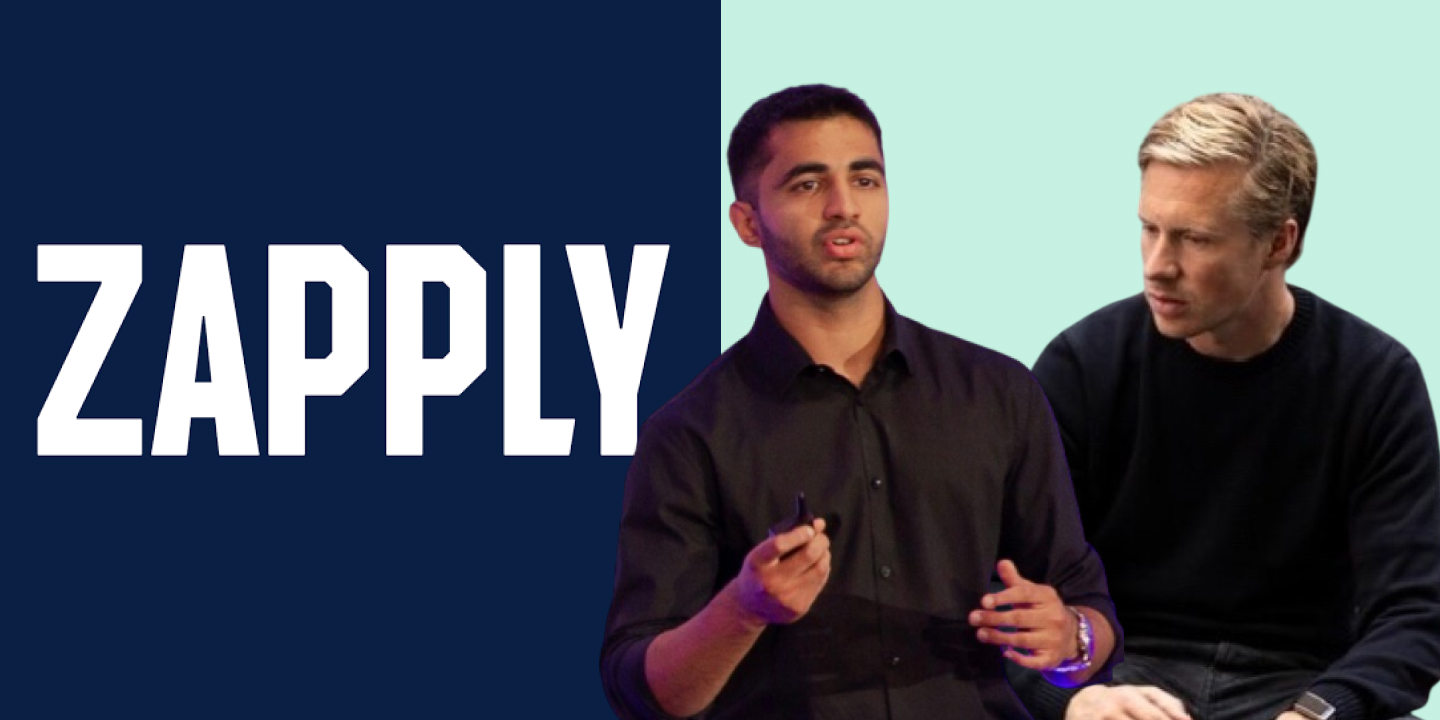
ZAPPLY co-founder Jelte-Pier Slump and Augmentum Media co-founder Sambhav Chadha on building influencer into a brand's main acquisition channel: finding creators at scale, vetting for trust, owning a niche, structuring deals around whitelisting, and running the whole thing as a five-part engine.
Jelte-Pier Slump, Co-Founder of ZAPPLY & Sambhav Chadha, Co-Founder of Augmentum Media · August 19, 2026 · Venice Experts
ZAPPLY co-founder Jelte-Pier Slump (JP) has built influencer into his brand's main acquisition channel by sponsoring fighters - boxers, kickboxers, and UFC athletes, including current UFC heavyweight champion Tom Aspinall - alongside comedians like Joey Diaz. In this session he and Sambhav Chadha, whose agency Augmentum Media has worked with the likes of Lululemon, Nestlé, AG1, and Huel on their influencer and affiliate programs, walked through the whole engine: finding creators at scale, vetting them, structuring deals, whitelisting, and keeping the channel profitable. The through-line from both: volume gets you started, but relationships are the moat.
Five takeaways for builders:
Start with volume. Scrape creators who match your customer with a tool like Modash, then reach out at scale - JP DMs the bigger names himself with a founder-shot video.
Vet with human eyes. Quantitative filters get you a list; content quality, comment quality, and story frequency are the three biggest indicators of trust in an influencer.
Own a niche. Fighters were cheaper than footballers and the deals compound - once one says yes, their network follows.
Structure every deal. A ~3-month trial before a year deal, whitelisting always, a podcast ad read and a shoot where possible, plus usage rights for your site, landers, and email. JP aims to break even on organic and email alone, with Meta as the upside.
Think engine, not one-offs. Five parts, from seeding to whitelisting and partnerships. Stack at least two; the further right you go, the more directly profitable the program.
Start with volume
JP says ZAPPLY has, he thinks, over 50 influencer contracts running, all vetted against their ideal customer: men 30+, fit. His starting advice for anyone without a program is to reach out to as many people as possible, using Modash to find profiles that match your ideal customer. For bigger names, he sends the DM himself as the founder - a general video introducing himself and the brand's traction.
"They will lay on the couch, see that video, and think, hey, that's a nice person, or not, and are more eager to respond."
— Jelte-Pier Slump, 00:15:16
Sambhav frames it the same way: every influencer strategy starts with discovery and outreach. His agency built an internal tool, Atlas, on top of the Modash API that surfaces some 20,000 influencers a week for clients - but the tooling only handles the quantitative half. A human should still review "the content, the quality of comments, and the story frequency, which are the three biggest indicators of trust in an influencer" (Sambhav, 00:16:32). Scale matters, especially for seeding and low-AOV products, but don't blast creators you'd never actually work with.
Own a niche
Why fighters? Partly personal preference and brand fit for a testosterone-support product - but also economics. Big corporates like Unilever and P&G were slower to touch combat sports, which kept deal prices down.
— Jelte-Pier Slump, 00:18:19
The bigger point: pick a niche and own it. Once one fighter signed, others trusted the brand, and now deals come to JP through the network.
Sambhav added a caveat for anyone copying the playbook: male-focused products have to index hard on credibility and performance-led approaches - content that works in ads - while softer seeding and gifting strategies skew female-focused across his portfolio.
Find the anchor creator, and check for a podcast
Step four in the playbook is landing one top creator in your niche. JP's green flags: the right age demographic, strong on camera, and - the big one - a podcast, because it guarantees fresh content every week or two. He negotiates an ad read into the deal, which keeps new creative flowing into Meta. One ad read with Carl Froch and Eddie Hearn talking on Froch's podcast - Froch pitching the product with humor, like he was telling a friend - had, JP says, over a million in spend, maybe more. TV work is another green flag: top-of-funnel reach that follower counts don't show. And once ads with a key figure work, other creators start DMing you - and inbound deals are easier deals.
Deals are made in person
JP keeps first deals short - around 3 months - and always includes whitelisting. Where possible he adds a shoot on location: four hours can yield easily 10 scripts, and on year deals he pushes for a shoot every quarter, bringing a regular cameraman and going himself to shoot founder-and-influencer content together. The relationship work is literal: filming Don Frye - the 60-plus UFC Hall of Famer - meant a first day of cigars and shooting guns before cameras rolled on day two. And when David Haye refused to do scripts at an expensive shoot, they just started filming a conversation about the product and cut the ads from that.
Sambhav's gloss: JP is being humble - his real edge is relationships. Everyone will be chasing the same influencers, and when the next brand in your category reaches out, the relationship is what makes the creator say no. It's also what makes the most flexible channel flexible: extra usage, extra hours, extra goodwill. JP added that it's never the first ad that works - you always need to iterate - and shared that an ad read with Draymond Green got no spend in the ad account despite the cost; a good relationship with the manager meant the conversation stayed win-win.
Whitelist everything, use it everywhere
JP won't sign without whitelisting - it cuts CPMs and builds trust - and his pitch to hesitant talent is topical: in the Meta AI era, anyone can make a fake picture of you and scale on it.
"I always negotiate whitelisting, so if they don't do whitelisting, I say, okay, hey, now with Meta AI, everybody's recreating people, so… I want that meta connection, because people can make a fake picture of you and scale on that."
— Jelte-Pier Slump, 00:31:49
He also treats each influencer as their own funnel: top-of-funnel video, mid- and bottom-funnel statics, picture rights for the website and landers, and email. A partnership email announcing Tom Aspinall - the UFC heavyweight champion - to US and UK customers performed, he says, like one of their best emails; he believes the email alone makes the deal back. His rule of thumb: break even on organic and email, and the Meta side is a nice extra.
The engine: five parts
Answering the pre-session questionnaire's two big asks - profitability and how to build a system - Sambhav laid out the framework behind the session's title: influencer is an engine, and an engine has parts. His slide maps five ways of working with creators, from seeding and gifting on the left through to whitelisting and partnerships on the right. Build a program by stacking at least two parts so it runs relatively full-funnel. The further right you push, the more directly profitable the program; the further left, the more it's a brand and top-of-funnel play.
Inside ZAPPLY, that engine gets reviewed on a weekly partner call: which partners are getting spend, which are decreasing, and what to fix - because a creative works when it gets spend. Fresh faces reliably spike performance (Tom Aspinall, and Don Frye in the US), each bringing their own audience with its own bottom funnel. Exclusivity matters too: nobody had ever whitelisted with Joey Diaz, which made his account higher-trust than heavily whitelisted ones.
Q&A highlights
Q: We mostly gift right now - when do you step up to bigger, longer deals? (Luuk, Founder of DEPLAY)
JP prices the organic side first: estimate the views a creator's channels will actually deliver, back that into a CPM, and that's what the organic presence alone is worth - he also runs a checklist (TV presence counts: Johan Derksen had no social media and still made sense). Never a year deal without proof on Meta - 3 months first, sometimes 6. And always ask their price before naming yours - it might be five times lower than what you'd have offered. Sambhav added that you can de-risk with structure as well as volume: bonus payments over a sales threshold, or hybrid commission-plus-flat-fee deals that lower the floor.
Q: Is the affiliate model dead? We killed ours after code leakage. (Kareem, Founder of BrainGain)
Not dead, Sambhav says, but it has evolved a ridiculous amount in the last 5 years - Augmentum ran AG1's affiliate engine this year. Since 80% of influencers, especially micro-influencers, won't generate sales, the game is holding the ones who do really close: DMs, personal check-ins, in-person events. For leakage, his team runs an automation comparing link clicks to code usage - if an influencer's conversion rate runs far above site-wide, the code has probably leaked; change it, and if it keeps happening, cut the affiliate. JP's added tool: Podscribe for podcast attribution (he thinks it works with YouTube too).
Q: Fixed fee or variable? (Mathias, Co-Founder of 8hours)
Fixed, if JP is confident - variable costs more as spend scales. US talent increasingly asks for spend fees (~10% of ad spend), which he tries to avoid; instead he layers a Social Snowball fee of 15% on organic sales and leaves ad spend out of it.
Q: Our product is in a taboo category and therefore hard to promote - which niche do we target? (Dennis, Co-Founder of Polarwise)
Volume again: reach out to enough people and some will say yes - you need flexible personalities who'll perform on camera, because the real sauce, JP says, is sometimes saying slightly crazy things.
Q: Pay upfront or on deliverables? (Ollie, Co-Founder of 8hours)
It depends on trust in both directions. JP paid Don Frye a large amount immediately to close a hesitant deal that's now one of the partnerships he's most proud of - but normally pays after delivery, or splits with roughly 20% upfront. Sambhav's caution: without a tight relationship, upfront payments produce late posts and mismatched CTAs. His fix for enforcement without souring the relationship: have someone else play bad cop on deliverables.
Resources JP & Sambhav referenced
Modash - influencer discovery platform both use to find creators matching an ideal customer profile; Augmentum's internal Atlas tool is built on its API
Social Snowball - affiliate/referral platform; JP runs a 15% fee on organic influencer sales through it
Podscribe - podcast ad attribution JP uses to measure ad reads (he thinks it works with YouTube too)
Froch On Fighting - Carl Froch's podcast, referenced for the Eddie Hearn ad read
ZAPPLY - JP's brand: an all-in-one supplement for men with around 14 ingredients
Augmentum Media - Sambhav's influencer agency for health, wellness, and personal care brands
About the speakers
Jelte-Pier Slump (JP) is the co-founder of ZAPPLY, an all-in-one men's supplement brand supporting testosterone, energy, and libido. A nutritionist by background, he launched the brand in the Netherlands three years ago, scaled it through kickboxing and boxing sponsorships into the UK, and is now expanding in the US - with influencer as the brand's main acquisition channel.
Sambhav Chadha is the co-founder of Augmentum Media, an influencer agency that has run influencer and affiliate programs for health, wellness, and personal care brands for the last 5 years - from ~$5M-revenue DTC brands to the likes of Lululemon, Nestlé, Athletic Greens (AG1), and Huel.
Related Articles
Continue reading with these related insights and strategies.
Tom van der Kolk led Ekster's US expansion to roughly 80–85% of its revenue and is now taking The Longevity Store there. In this Venice All Hands he covers entity setup, the importance of hiring native US copywriters, and the avatar-and-CBO playbook for finding your American angle.
Two Venice operators on building an in-house content engine: Kasper Brandi Petersen (LABFRESH) on making 2,000+ videos a year with no agency or influencer fees, and Ash Read on where SEO is heading as buyers start asking AI to shortlist brands.
Tom Gozney built Gozney from a £5,000 loan and a homemade garden oven into a ~$100M live-fire cooking brand. In this Venice AMA he breaks down brand-building over revenue-chasing, scarcity and drop culture and distribution discipline.
October 7, 2026
Ready to connect?
Start exploring the Venice community and discover new opportunities to grow your business.